For build-to-rent (BTR) developers, flexibility is no longer a nice-to-have, it’s becoming essential. Rising costs, evolving regulations, and shifting renter expectations are putting pressure on every decision, from unit mix and site planning to overall product strategy.
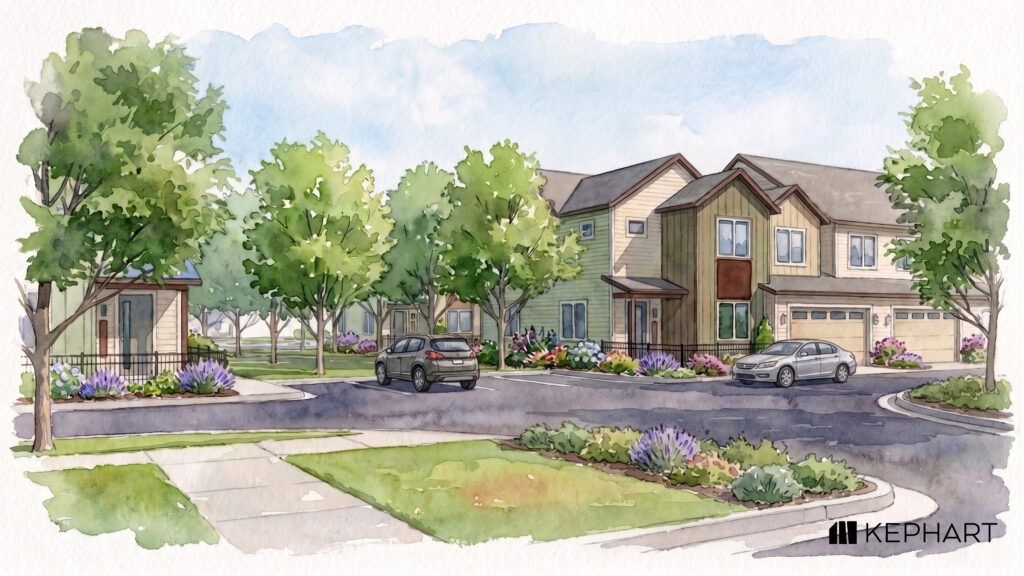
At KEPHART, we see this moment as an opportunity to think differently. Our work in the BTR space, including projects like Birdsong at Alamo Ranch and The Collection at Gruene, has shown that thoughtful design can unlock both flexibility and long-term value. In those communities, our front-to-back paired home concept created a product that feels like a single-family home while maintaining the density and efficiency developers need.
As market conditions continue to shift and policy conversations raise new questions about the future of certain housing types, we are continuing to evolve that thinking. The goal is simple, it’s to help our clients achieve their needed yield while adapting faster and creating communities that people genuinely want to call home.
Why Flexibility Matters
When conditions change, the challenge is not simply adding or removing units from the site, it’s a nuanced act of balancing economics, entitlement, and resident experience at the same time.
- A product type that worked yesterday may face new scrutiny tomorrow
- Density still needs to support land and construction costs
- Renters still expect privacy, identity, and a neighborhood feel
We have learned that flexibility works best when it’s built into both the architecture and the site plan from the beginning. It’s not just about swapping unit types, it’s about creating a design framework that can evolve without losing the character, livability, or financial performance of the community.
Evolving the Paired Home Prototype
Building on the success of our front-to-back paired homes, our team explored how the concept could expand into a more adaptable, multi-unit footprint.
The result is a tri-plex prototype that combines two, 1-bedroom homes paired front-to-back with a single, 2-3-bedroom townhome within the same building footprint as our paired homes.
By combining these unit types within one building footprint, developers can diversify their mix while maintaining efficiency. More importantly, the approach creates a path to move away from paired-only configurations if needed, without having to restart the design process from scratch.

Alley Roads

Neighborhood Pods
Rethinking the Site Plan: From Alley Roads to Neighborhood Pods
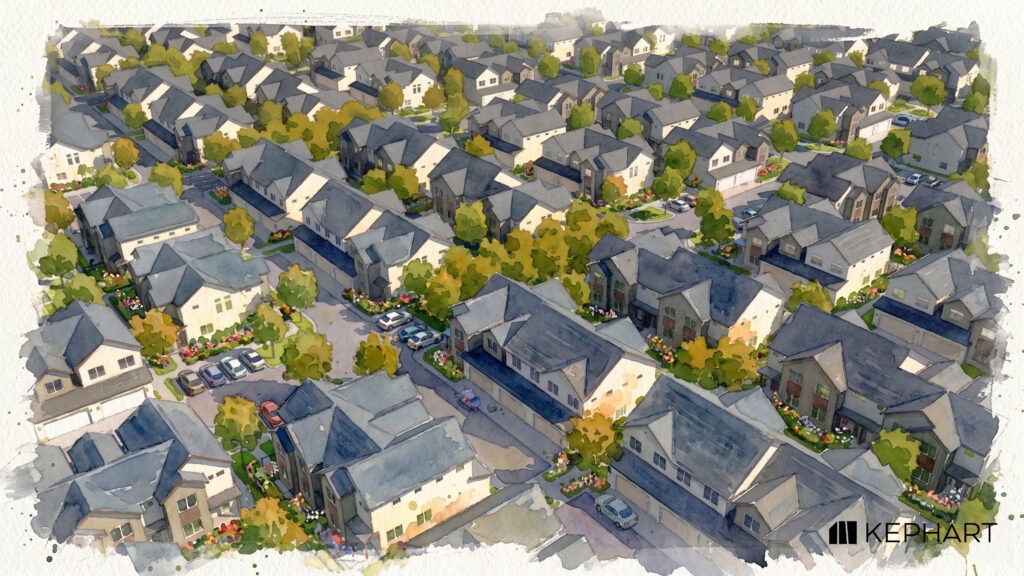
Flexibility does not stop at the building. It also shapes how a community is organized. A conventional approach might place a multi-unit building (with 3 or 4 homes) along rear-loaded alleys or “finger roads,” maximizing efficiency but often creating spaces that feel secondary or leftover.
Our team took a different approach. We reimagined the same building within a repeatable “pod” layout inspired by classic courtyard and cluster planning strategies:
- Roads are shaped to feel intentional, not leftover
- Shared spaces become central, visible, and usable
- Buildings frame a more cohesive neighborhood experience
- The layout can repeat across a site with clear edges and structure
When homes are organized in a cluster instead of lined up, the density remains nearly identical, with only a 0.25 du/ac difference. At the same time, the layout creates a more comfortable and approachable environment for residents.
This is where planning and architecture working together at KEPHART makes a difference. A small adjustment in layout can significantly change how a community feels and how it performs financially.
What Developers Gain
Being able to switch between paired homes to a tri-plex within the same footprint gives developers flexibility when it matters most.
- A fallback strategy if paired homes face entitlement or regulatory challenges
- Density preservation without relying on a single product type
- Improved site performance through more intentional layouts
- Broader renter appeal through a wider mix of unit types
- A stronger sense of place compared to purely efficiency-driven plans
Most importantly, it helps keep projects moving. When market conditions, jurisdictional requirements, or entitlement conversations change, teams can adapt rather than restart.
A More Resilient Approach to BTR
At KEPHART, our goal is not just to design buildings and site plans. It is to help our clients navigate uncertainty with confidence. That means combining proven ideas, like the front-to-back paired home, with new thinking that expands what’s possible.
When flexible architecture and intentional planning work together, communities can:
- Respond to policy shifts
- Protect financial performance
- Deliver a better resident experience
As the BTR landscape continues to evolve, the projects that succeed will be the ones designed to adapt.
If you are exploring how to position your next BTR community for long-term success, KEPHART would welcome the opportunity to work through it with you.